Pregnancy Coach After Miscarriage: Finding Support
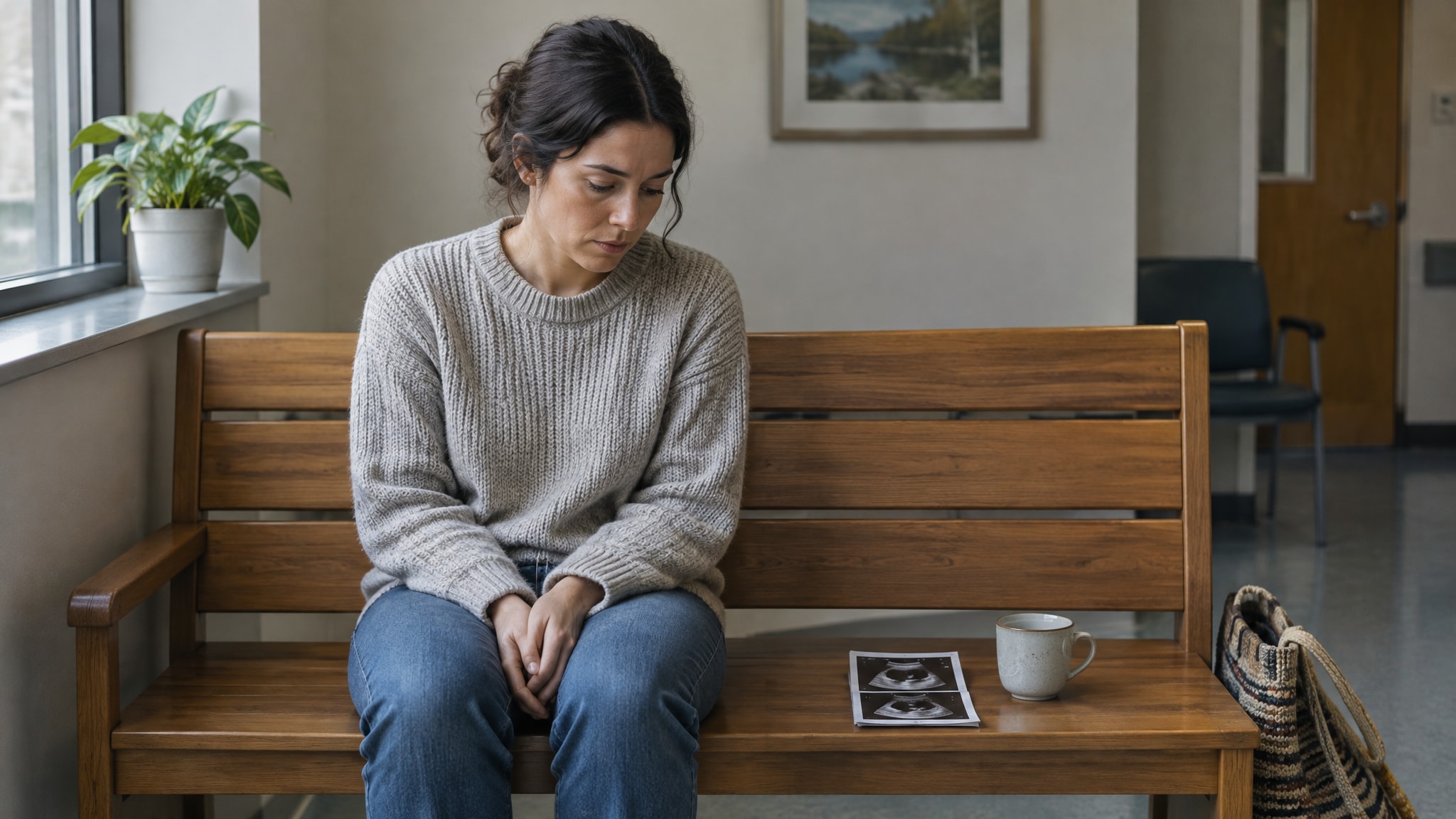
If you have lost a pregnancy and are now thinking about trying again, or you are pregnant again and finding it hard to believe it will hold, this piece is for you. I'm Loukas Panether, and I coach women through the months before conception, through pregnancy and into birth. I am a trainer, not a doctor or a counsellor, and I'll be plain about that throughout.
What I can offer is something I think is missing: steady, ongoing physical and emotional coaching through a pregnancy that follows a loss, from someone who has lived close to that loss.
When the appointments end, the worry often doesn't
I keep coming back to one moment, and it isn't dramatic. It's the minute after a scan goes well. The relief arrives, and the fear arrives in the same breath, and there is nobody in the room whose job it is to sit with both.
That is what I see again and again in this work, and it's an observation from my own practice rather than a finding from a study. Clinical care after a loss is there, and it matters. A GP, an obstetrician or a midwife looks after the pregnancy itself. Grief resources exist, too, and many are excellent.
What I notice is the stretch between them. The appointments end, you walk out into the week, and the fear comes with you. Nobody is checking in on how you sleep, how your body feels to live in, or what you do at 3 am when a twinge sends you to the internet.
You may well be someone who has run courtrooms, teams or budgets without flinching. Pregnancy after loss can feel like the first thing you cannot manage into submission, and that is a hard thing to carry alone.
Where this work started
A family history of pregnancy loss and trauma
Pregnancy loss and trauma run through my family. That is the root of this practice, and I'd rather say so directly than dress it up.
I want to be careful about what I claim. This is my family's history, not my own body's. I have never been the one waiting on a result in a clinic, and I won't pretend otherwise. The stories inside my family belong to the people who lived them, so I don't tell them here.
What I can say is that I grew up understanding that pregnancy can be a place of great hope and great fear at once. I learned how far a loss reaches, into the people who weren't pregnant as well as the person who was. That understanding shapes how I listen to the women I work with.
From personal training to pregnancy work
Before this, I was a personal trainer. Years of hands-on work taught me how people carry fear in their bodies: how they brace, how they hold their breath, how they stop trusting a body that has let them down.
Over time my work moved toward women before conception and through pregnancy. Today I combine prenatal physical training with emotional support and birth preparation, from the months before conception through to birth.
My authority comes from those years on the training floor and from my family's experience. It does not come from clinical credentials, and you should weigh it that way.
What pregnancy coaching after miscarriage involves, and where it stops
A pregnancy coach after miscarriage does three things in my practice: physical training, emotional support and birth preparation. All three sit alongside your clinical care and none replaces it.
Think of the difference this way. Your obstetrician or midwife monitors the pregnancy. A grief counsellor helps you work through what happened. Coaching is the ongoing, practical company in between: what you do with your body this week, how you talk to yourself before a scan, what you want your birth to look like.
It is not general grief counselling. My focus is trying again and pregnancy after loss, and if you need to work through the loss itself in depth, a counsellor or psychologist is the right person for that.
Coaching also does not promise an outcome. I can't prevent a loss, and no training plan can. Anyone who tells you otherwise is selling you something.
Working alongside clinical care
Your GP, obstetrician or midwife stays in charge of anything medical. That means monitoring, scans, advice about what is safe for you and any decision about timing or treatment.
I work around that. If your clinician asks you to pause training, we pause. If your care team has a view on what to avoid, I want to hear it, and I'm glad to adjust. You are the one who passes information between us, and I'd rather you felt free to ask them anything than treat my word as the last one.
Trying again after miscarriage
Trying again after miscarriage is rarely a clean restart. Some women feel ready within weeks, and others feel the question hanging over them for a long time. I don't set that timeline, and I won't nudge you in either direction. Timing belongs to you and your clinician.
What I can do is help the waiting and the trying feel less like holding your breath.
Preconception preparation after a loss
On the physical side, preparation means building strength and routine at a pace your body is comfortable with, after checking in with your GP where that's relevant. You should tell me about anything your doctor has raised, because it shapes everything we do.
The emotional side is quieter and, for many women, harder. We talk about what you're afraid of, what you hope for and what you want around you if a test turns positive. We plan for the first weeks, which can be the loneliest.
One honest point: being ready is not the same as being unafraid. You may do everything right and still feel dread when the line appears. Fear does not mean you chose badly or came too soon. It often means the last pregnancy mattered.
Pregnancy after loss support that takes fear seriously
Pregnancy after loss support has to start by admitting that routine antenatal care is built around the pregnancy, not around what the last one cost you. Visits are brief and the checklist is clinical. Care after a previous loss can involve earlier scans and closer monitoring, which some women find reassuring and others find hard to sit through. Your obstetrician or midwife will tell you what applies to you.
Subsequent pregnancy anxiety, named plainly
Let me name it, because it often goes unspoken. Subsequent pregnancy anxiety is the dread you feel on scan day, the walk down the corridor when you already half expect bad news.
It's the sense that your body has already let you down once, so why would it hold this time. It's checking every twinge, every trip to the bathroom, every morning when the nausea eases and you wonder what that means.
None of this is silly, and none of it is weakness. It's what a sensible nervous system does after it has been hurt.
For women used to controlling outcomes, it can feel worse. Effort and preparation have always paid off for you, and here they don't buy certainty. I won't pretend to give you certainty. I can help you carry the lack of it.
Emotional support after pregnancy loss, without rushing grief
Grief doesn't stay in the past just because you are pregnant again. It can resurface at scans, at the date you lost the last pregnancy, or when you pass the gestation you reached before. Emotional support after pregnancy loss, in my work, means making room for that without hurrying it along or insisting you stay positive.
In practice, that is conversation woven through the training and the preparation. You can bring sadness and hope to the same session, and neither has to cancel out the other. I don't use clinical language with you, and I don't push you to feel differently than you do.
There are limits here, and they matter. If low mood or anxiety persists, or it stops you functioning, please see your GP or call PANDA on 1300 726 306, which supports people through pregnancy and early parenthood. Perinatal mental health care should come first in that situation, and I'm happy to keep coaching alongside it. If you have thoughts of harming yourself, call Lifeline on 13 11 14, or 000 in an emergency.
Physical coaching through a later pregnancy
Australian guidance on physical activity in pregnancy generally supports staying active through an uncomplicated pregnancy, adjusting as it progresses and checking with a health professional. That is the frame I work inside. I don't claim that training prevents loss or improves outcomes, because I can't know that. I do see what it does for how women feel in their own skin, and for how ready they are to give birth.
Rebuilding trust in your body
After a loss, many women stop trusting their bodies. They treat them as something that failed, or something to monitor from a distance. Movement can be one way back, but only if it is gentle and graded.
We start small. A session might be mostly walking, breathing and simple strength work, with you setting the limit and me watching how you respond. Each session you finish, and each time your body does what you asked, adds a small piece of evidence that it is capable.
I don't push intensity. You are not training for a result, so a short, calm session is a good session.
Training that works alongside your clinical team
As the pregnancy progresses, the training changes with it. What suits you in the first trimester will not suit you in the third, and if your care team gives you restrictions, we follow them without argument.
I'd encourage you to tell your obstetrician or midwife what you're doing, and to tell me what they say. Neither of us should be guessing. If something worries you, such as pain, bleeding or anything that feels wrong, stop and contact your clinician first.
Choosing support and taking the next step
Choosing a coach for pregnancy after miscarriage is partly about credentials and partly about fit. Ask whether they are clear about what they are and aren't. A good coach says plainly they are not a replacement for your GP, obstetrician or midwife, and they promise no outcomes. They should be happy to work with your clinicians, and they should be able to talk about loss without flinching or rushing you toward a silver lining.
Then notice how the first conversation feels. You should come away feeling heard rather than managed.
Ongoing coaching suits you if you want steady company through the whole pregnancy, and if you are used to handling things yourself and would like to stop doing this part alone. It doesn't suit you if you need crisis care or in-depth therapy right now. Start there, and come to me when you have that support in place.
I offer two ways to work together:
- In-person, St Kilda East: an 18-month package in Melbourne, for women who want regular, face-to-face training and support from the months before conception through to birth.
- Online: the Pregnancy Wellness Program, available globally, for women outside Melbourne or who prefer to work from home. If you'd like more detail on how it runs, here is a closer look at the online program.
Both combine prenatal physical training, emotional support and birth preparation. The main difference is how we meet, and which suits you depends on where you live and how you like to work.
If you aren't sure which to choose, or whether coaching is right for you at all, get in touch to talk it through. Tell me where you are in your journey, and we'll work out together whether I can help.
Frequently asked questions
Do I still need my GP, obstetrician or midwife if I work with a pregnancy coach?
Yes. Coaching sits alongside clinical care and never replaces it. Your clinicians handle monitoring, scans and medical decisions, while I handle physical training, emotional support and birth preparation, adjusted to whatever your care team advises.
How do I know when it's the right time to try again after a miscarriage?
That decision belongs to you and your clinician, and I don't set a timeline. Some women feel ready quickly and others need much longer. Coaching can help you prepare physically and emotionally, but it can't tell you when to start.
Can coaching take away the anxiety of being pregnant again after a loss?
No, and I won't promise it. Subsequent pregnancy anxiety is a understandable response to what you've been through. What coaching offers is steady support, a place to say the fear out loud, and a body you've learned to trust a little more. If low mood or anxiety persists, see your GP or call PANDA on 1300 726 306.
Can I start before I'm pregnant?
Yes. I work with women from the months before conception through to birth. Starting early gives you time to build strength and talk through your fears before a test turns positive.
What's the difference between the in-person package and the online program?
The in-person package is an 18-month commitment in St Kilda East, Melbourne, with face-to-face sessions. The Pregnancy Wellness Program is online and available globally. Both combine prenatal physical training, emotional support and birth preparation, so the choice mostly comes down to where you live and how you like to work.